
What’s My AML ID?
Acute Myeloid Leukemia (AML) Is Not One Disease
Every AML has a unique genetic ID. Knowing it can help guide treatment decisions.
Understanding AML
What is AML?
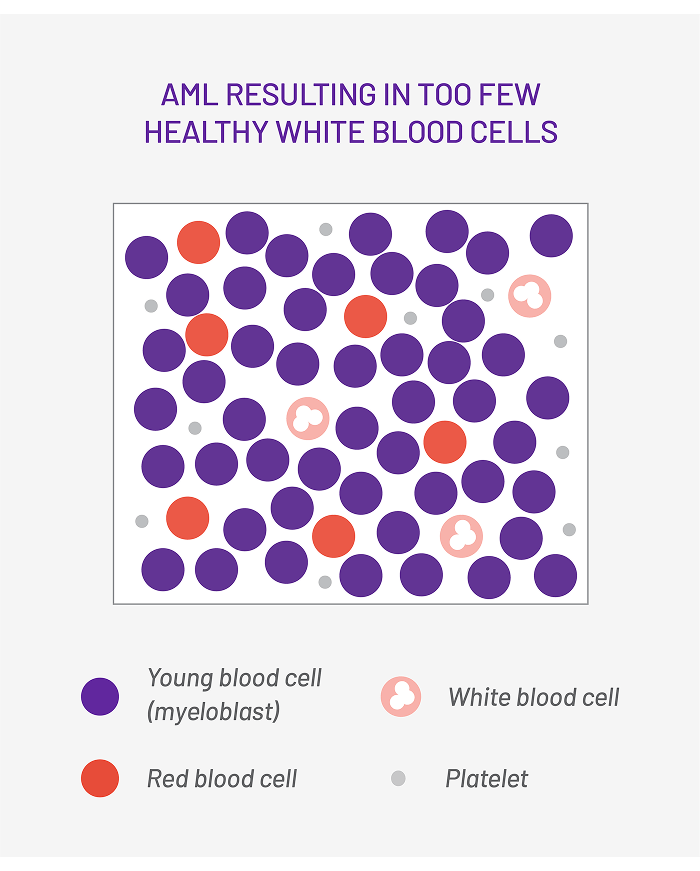
Acute myeloid leukemia is a type of cancer that starts in the bone marrow, the soft tissue inside your bones where new blood cells are made.1 In AML, the cells that normally develop into healthy blood cells change and grow out of control.1 This causes too many abnormal white blood cells to build up in the bone marrow and interfere with the production of normal blood cells.1 Because AML can progress quickly, timely diagnosis and treatment are important.1
AML is most common in adults, particularly older adults, but it can show up at any age.1 Doctors don’t know the exact cause, but AML is linked to genetic mutations and chromosomal abnormalities.2
Common Symptoms & Diagnosis
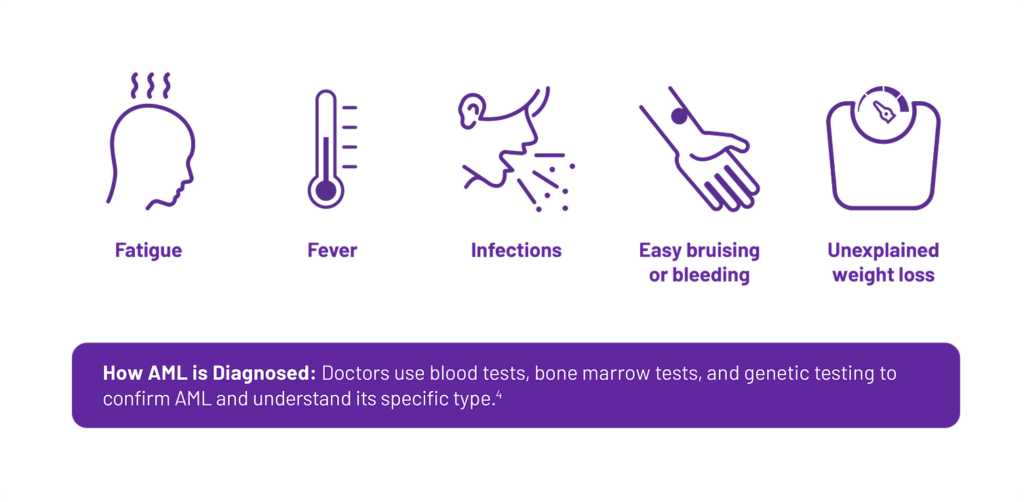
Common symptoms of AML may include fatigue, fever, infections, easy bruising or bleeding, and unexplained weight loss.3
Importance of Genetic Testing
Why Genetic Mutations Matter
AML is characterized by changes (mutations) in genes that disrupt normal blood cell development.5 These mutations can switch on “bad” growth genes or switch off the genes that normally stop cells from growing too much, causing cells to grow out of control.5 Advancements in mutational testing have identified common recurrent mutations, including FLT3, NPM1 and IDH1/2.5
Because AML can evolve during treatment or at relapse, both initial testing and repeat mutation testing at the first sign of progression are critical for guiding care.6

IDH Mutations in AML
IDH (isocitrate dehydrogenase) mutations are found in more than approximately 20% of AML patients, and prevalence increases with age.
The mutation is present in about 6-19% of adults.7
Building a Treatment Plan
Treatment plans can be tailored based on genetic testing results and overall health. Treatment can involve chemotherapy, targeted therapies (precision or personalized medicines that treat cancer by targeting specific features, changes or mutations in the cancer cells), and, in some cases, stem cell transplantation.8,9
How An “AML ID” Can Help Guide Care
An AML ID gives the care team critical information about a person’s disease. Genetic testing results may help guide discussions about treatment options, including whether targeted therapies designed for specific mutations may be appropriate for you or your loved one.4
What’s My AML ID Infographic
Every AML has a unique genetic ID. Knowing it can help guide treatment decisions.
1 American Cancer Society. About acute myeloid leukemia (AML). https://www.cancer.org/cancer/types/acute-myeloid-leukemia/about.html. Accessed May 5, 2026.
2 American Cancer Society. Acute myeloid leukemia causes, risk factors, and prevention. https://www.cancer.org/cancer/types/acute-myeloid-leukemia/causes-risks-prevention.html.
Accessed May 5, 2026.
3 American Cancer Society. Signs and symptoms of acute myeloid leukemia. https://www.cancer.org/cancer/types/acute-myeloid-leukemia/detection-diagnosis-staging/signs
symptoms.html. Accessed May 5, 2026.
4 American Cancer Society. Tests for acute myeloid leukemia (AML). https://www.cancer.org/cancer/types/acute-myeloid-leukemia/detection-diagnosis-staging/how-diagnosed.html. Accessed May 5, 2026.
5 Cancer Genome Atlas Research Network. Genomic andepigenomic landscapes of adult de novo acute myeloid leukemia. N Engl J Med. 2013;368(22):2059-2074. doi:10.1056/NEJMoa1301689
6 Thol F, Döhner H, Ganser A. How I treatrefractory and relapsed acute myeloid leukemia. Blood. 2024;143(1):11-20. doi:10.1182/blood.2023022481
7 Study offers insights on prognostic significance of IDH mutations acrossage groups in AML. Oncologist. 2021;26(suppl S1):S13-S14. doi:10.1002/onco.13656
8 Cao L, Wang Z, Cui Y, Li Y, Xiang Q. Emerging strategies and novel therapeutic targets in acutemyeloid leukemia: current advances and future directions. Biomark Res. 2025;13(1):127. doi:10.1186/s40364-025-00839-2
9 American Cancer Society. Targeted therapy. https://www.cancer.org/treatment/treatments-and-side-effects/treatment-types/targeted-therapy.html. Accessed May 5, 2026.
US-04001 7/26
© Servier Pharmaceuticals LLC. Boston, MA 02210. Customer Service: 1-800-807-6124. Servier and the Servier Logo are registered trademarks of LES LABORATOIRES SERVIER